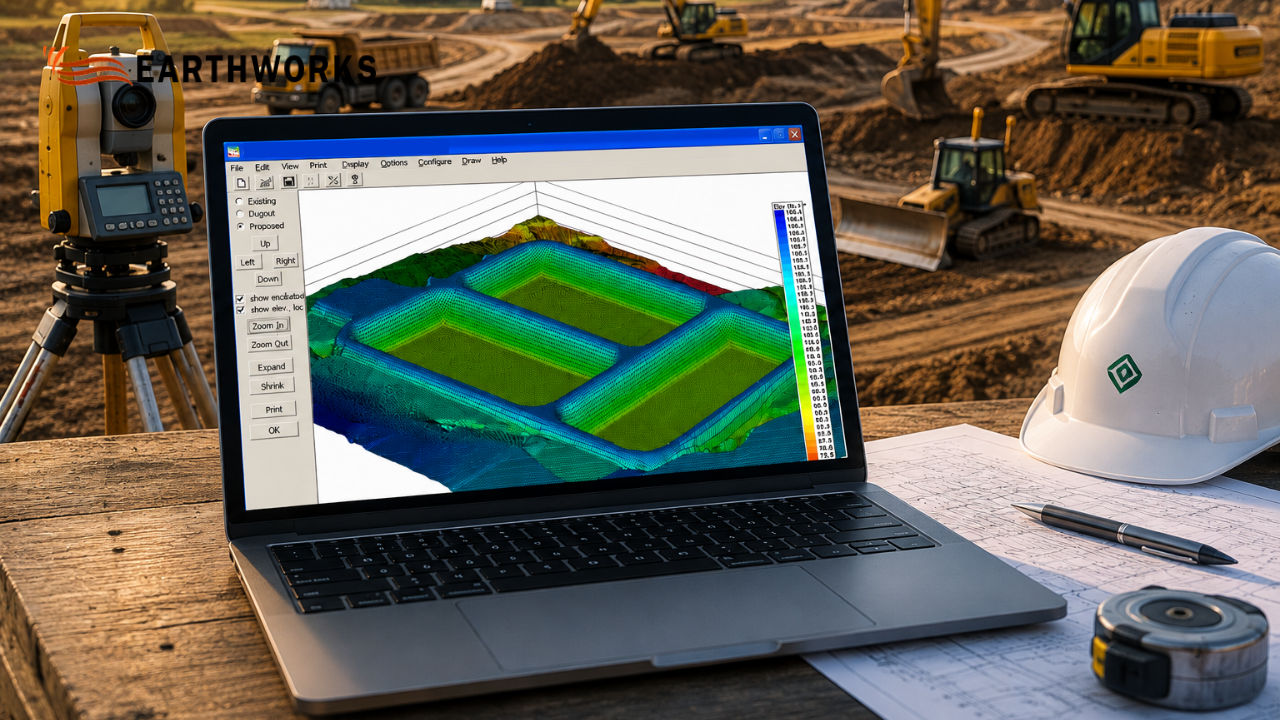
...

Excavation Software: 7 Planning Mistakes Contractors Should Avoid

Before an excavator reaches the job site, contractors have already made decisions that can determine whether a project stays on schedule or faces costly delays. Inaccurate quantity estimates, outdated plans, and inefficient workflows can create challenges that affect budgets, timelines, and productivity. For contractors managing complex earthwork projects, excavation software can help contractors review project information, support planning processes, and better understand project requirements before construction begins.

Excavation is not simply about moving material from one location to another. It requires careful coordination of site conditions, earthwork quantities, equipment requirements, and project schedules. Avoiding common planning mistakes can help contractors create more organized workflows and better prepare for potential challenges during construction.

Why Can Poor Excavation Planning Delay Construction Projects?

Excavation planning influences nearly every stage of an earthwork project. A mistake made during estimating or preparation can create larger issues once crews and equipment are already committed.

Common consequences of poor planning include:

  • Incorrect project bids
  • Unexpected material requirements
  • Inefficient equipment usage
  • Additional hauling costs
  • Delays caused by rework

By identifying potential challenges before construction begins, contractors can make better decisions and improve project efficiency.

1. Estimating Projects Without Accurate Earthwork Quantities

Accurate quantities are essential for preparing reliable excavation estimates. When contractors rely on incomplete information or manual calculations, they may underestimate the true scope of work.

Quantity errors can impact:

  • Project bids
  • Material planning
  • Equipment requirements
  • Overall project costs

Even a small difference between estimated and actual quantities can affect project performance. Reviewing accurate earthwork data before bidding helps contractors evaluate project requirements and prepare more informed estimates.

2. Ignoring Cut-and-Fill Balance During Project Planning

Cut-and-fill calculations help contractors determine how material will be moved across a site. Without proper analysis, teams may encounter unexpected challenges after excavation begins.

Poor cut-and-fill planning can result in:

  • Excess material removal
  • Additional fill requirements
  • Longer hauling distances
  • Delays in grading activities

Understanding earthwork balance early helps contractors plan material movement more effectively and minimize unnecessary work.

3. Starting Excavation With Outdated Site Information

Construction projects often change before work begins. Design updates, revised specifications, and changing site conditions can affect excavation requirements.

Using outdated information may lead to:

  • Incorrect takeoffs
  • Miscalculated quantities
  • Unnecessary rework
  • Delayed decisions

Keeping project data accurate and accessible allows teams to work from the most current information throughout the planning process.

4. Failing to Plan Material Movement and Equipment Needs

Efficient excavation requires more than knowing how much material needs to be moved. Contractors also need to understand where materials will go and how equipment will support the workflow.

Poor planning may create:

  • Increased hauling time
  • Equipment downtime
  • Scheduling conflicts
  • Reduced productivity

Planning material movement before work begins helps contractors coordinate resources and address potential disruptions more effectively.

5. Creating Gaps Between Estimating Teams and Field Operations

Excavation projects often involve multiple teams working with estimates, drawings, quantity calculations, and project updates. When information is spread across separate systems, maintaining accuracy becomes more difficult.

Disconnected workflows can lead to:

  • Conflicting project information
  • Repeated calculations
  • Missed updates
  • Communication gaps

Earthworks supports contractors with tools designed to help manage takeoffs, quantity analysis, and project planning workflows.

6. Discovering Planning Issues After Equipment Is Mobilized

Some excavation challenges only become visible after crews and equipment are already on-site. At that point, making adjustments can affect schedules and increase project costs.

Early planning reviews can help contractors identify potential issues related to:

  • Site requirements
  • Material quantities
  • Grading needs
  • Equipment planning

Identifying these challenges earlier can give teams more time to evaluate possible adjustments.

7. Relying on Manual Workflows for Complex Earthwork Projects

Manual spreadsheets and traditional processes may become difficult to manage as excavation projects become larger and more detailed. Tracking quantities, updating estimates, and reviewing project changes manually can slow down decision-making.

Modern digital solutions allow contractors to analyze project information more efficiently. The right excavation software can help teams review requirements, support estimating workflows, and manage project details in a more organized way.

How Can Better Planning Improve Excavation Project Outcomes?

Successful excavation projects depend on preparation long before equipment reaches the site. By avoiding common planning mistakes, contractors can reduce disruptions, improve coordination, and create smoother project workflows.

As excavation projects become more complex, digital tools can provide valuable support throughout the planning process. By adopting excavation software, contractors may be able to take a more organized approach to estimating, analyzing, and managing earthwork requirements.

Better excavation outcomes start before the first load of material is moved. With a more organized planning process, contractors can improve estimating confidence, prepare for potential challenges, and approach projects with clearer information.

READ MORE
Excavation Software | Earthworks for Accurate Quantity Takeoffs

What Is Excavation Software and How Does It Improve Takeoffs?

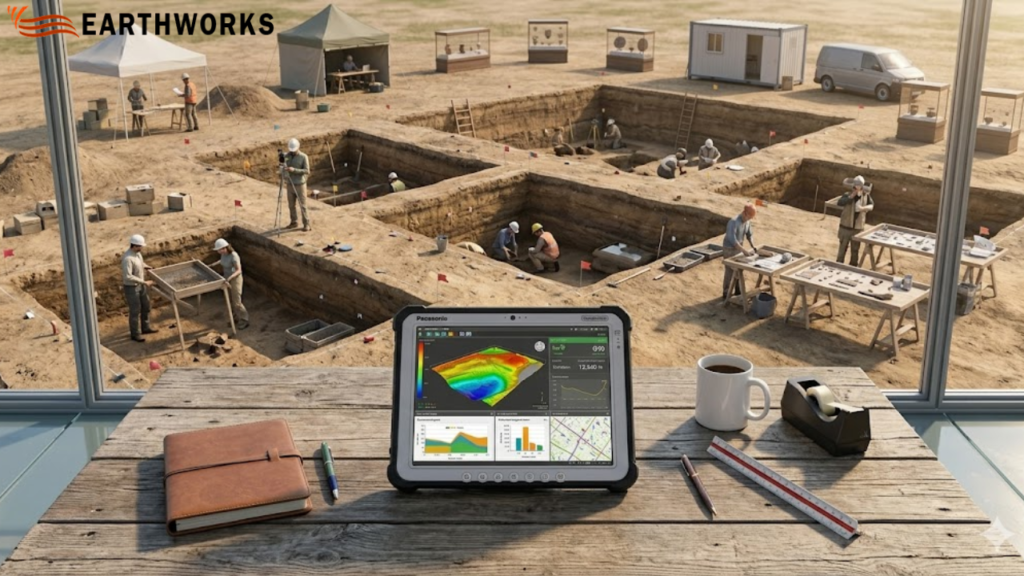
Excavation software displaying digital takeoff data and quantity estimates for an active excavation project site

At Earthworks, we focus on solving one of the most time-sensitive problems in construction estimating—turning drawings into accurate earthwork quantities without unnecessary delays or manual errors.

That’s why excavation software sits at the core of how Earthworks helps contractors, estimators, and civil teams move from project drawings to reliable cut-and-fill calculations in a faster, more controlled way.

Instead of spending hours tracing plans or building spreadsheets from scratch, Earthworks is designed to streamline the estimating process using structured digital takeoffs directly from PDF and CAD files.

The result is simple: clearer quantities, faster turnaround, and more consistent estimates.

Built for real estimating challenges in construction

Earthworks is designed specifically for excavation takeoffs and earthwork estimation workflows. It focuses on accuracy at the earliest stage of project planning—where most cost and time risks begin.

With Earthworks, users can:

  • Import PDF and CAD drawings for direct measurement
  • Perform digital excavation takeoffs on plan surfaces
  • Generate cut, fill, and net volume calculations
  • Reduce manual tracing and spreadsheet dependency
  • Work with structured, repeatable estimating workflows

Everything is built around improving speed and consistency in earthwork estimation.

How excavation software improves estimating accuracy

Traditional excavation estimating depends heavily on manual interpretation, which often leads to variation between estimators and repeated corrections later in the process.

Using digital tools, design drawings are converted into measurable surfaces. 

This allows users to:

  • Measure volumes directly from design files
  • Compare existing and proposed surfaces with precision
  • Automatically calculate cut, fill, and net quantities
  • Reduce interpretation errors from scaled drawings
  • Update quantities quickly when plans are revised

By linking every calculation directly to the drawing, Earthworks reduces uncertainty in early-stage estimating.

Why accuracy matters in excavation takeoffs

In construction estimation, even small errors can scale into significant cost differences across an entire project.

Common issues Earthworks helps reduce include:

  • Inconsistent manual measurements
  • Errors from scaling or drawing interpretation
  • Repetitive recalculation during revisions
  • Variations between estimators
  • Time lost in rework and correction cycles

Earthworks is designed to bring consistency to a process that is traditionally fragmented across tools and spreadsheets.

A structured workflow designed for clarity

Earthworks is built to keep the estimating process simple, structured, and repeatable.

A typical workflow includes:

  • Uploading project drawings (PDF or CAD)
  • Defining site surfaces for measurement
  • Running excavation and fill calculations
  • Reviewing cut, fill, and net results
  • Updating takeoffs when drawings change

This structured approach helps reduce unnecessary complexity and keeps estimation focused on output accuracy.

Reducing estimation risk with better data control

One of the key advantages of Earthworks is improved control over estimating data.

With digital tools, teams can: 

  • Maintain consistency across multiple estimates
  • Reduce manual calculation errors 
  • Ensure updates reflect across all quantities
  • Standardize reporting outputs
  • Support more consistent and reliable bid preparation 

This level of control helps reduce risk during early project planning, where accuracy has the highest financial impact.

Why contractors and estimators use Earthworks

Earthworks is designed for professionals who need reliable earthwork quantities without spending excessive time on manual processes.

Teams choose Earthworks for:

  • Faster digital takeoffs compared to manual methods
  • Reduced reliance on spreadsheets and manual tracing
  • Clear, structured earthwork estimation workflow
  • Easy handling of drawing revisions
  • Focused functionality for excavation estimating only

It is built to support estimating teams that prioritize speed, accuracy, and repeatability.

Trust and reliability in estimating workflows 

Earthworks is developed around a principle of measurable accuracy—helping ensure outputs are based directly on source drawings rather than manual interpretation. 

This improves:

  • Experience: Built around real-world estimating workflows
  • Expertise: Focused on excavation and earthwork takeoffs
  • Authority: Designed specifically for construction estimating use cases
  • Trust: Transparent, drawing-based measurement system

Keeping calculations grounded in design data helps improve clarity in early-stage project estimates. 

Where excavation software is heading in construction

The estimating process in construction is rapidly becoming more digital and data-driven.

With digital excavation tools, the industry is moving toward:

  • Faster, more repeatable digital takeoffs
  • Reduced reliance on manual measurement workflows 
  • More consistent quantity forecasting 
  • Standardized estimating outputs across teams
  • Improved handling of drawing revisions

Earthworks fits into this shift by focusing strictly on excavation and earthwork estimation workflows.

Final thoughts

Earthworks in San Diego is built to help construction teams produce faster, more accurate excavation takeoffs.

Replacing manual measurement with structured digital workflows improves consistency in quantity calculations and reduces time spent on repetitive estimating tasks.

From design drawings to earthwork quantities, the process becomes clearer, faster, and more reliable—giving teams greater confidence in every estimate.

For modern construction estimating, that clarity is not just helpful—it’s essential.

READ MORE
Seraphinite AcceleratorBannerText_Seraphinite Accelerator
Turns on site high speed to be attractive for people and search engines.