Cloud Takeoff Software for Accurate Construction Estimates

How Does Cloud Takeoff Software Improve Construction Estimating Accuracy?


If you’ve ever spent hours measuring drawings manually, you already know how easy it is to make small but costly mistakes. That’s where
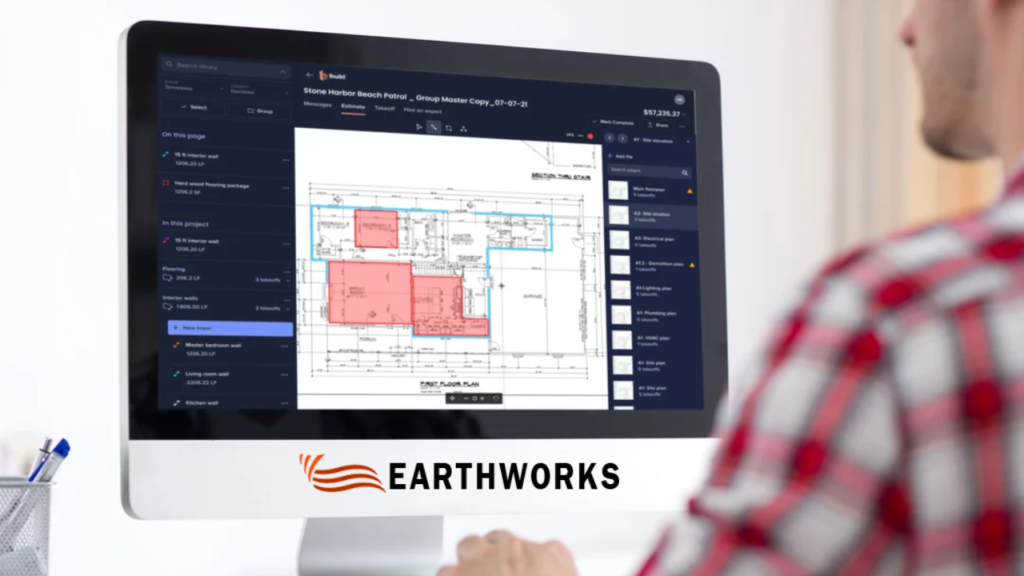
cloud takeoff software starts to change the game. Instead of relying on paper plans or scattered tools, everything moves into one connected space where measurements, calculations, and updates happen in real time.

For contractors and estimators, this shift isn’t just about speed. It’s about clarity, consistency, and having confidence in the numbers you present.

Cloud takeoff software

What Is Cloud Takeoff Software and Why Does It Matter?

At its core, cloud takeoff software allows you to measure digital plans directly from your browser. No installations. No version confusion. Just access from anywhere.

But the real value goes beyond convenience.

Here’s why it matters:

  • You’re working on the latest drawings
  • Your team sees the same data in real time
  • Changes may not require starting over
  • Calculations update automatically

That means fewer errors creeping into your estimates—and fewer surprises later in the project.

How Does It Save Time During Estimating?

Time is one of the biggest pressures in construction bidding. Deadlines can sneak up on you, and missing even one might mean losing the job altogether.

With cloud-based tools, a lot of the manual effort reduces.

Instead of:

  • Printing drawings
  • Using scale rulers
  • Re-checking numbers repeatedly

You can:

  • Measure directly on-screen
  • Store templates for repeated tasks
  • Reuse previous takeoffs for similar projects

Can It Really Reduce Human Errors?

Yes—and this is one of the biggest advantages.

Manual takeoffs often involve:

  • Repetitive calculations
  • Switching between tools
  • Writing down measurements

Every step introduces a chance for mistakes.

With cloud takeoff software, many of these risks are minimized because:

  • Measurements are calculated automatically
  • Units stay consistent
  • Data is stored and organized in one place

You’re not relying on memory or handwritten notes anymore. Everything is tracked, visible, and easy to verify.

How Does Collaboration Improve with Cloud Tools?

Construction estimating is rarely a solo task. Teams often need to review, adjust, and approve numbers before submission.

Traditional workflows slow this down. Files get shared back and forth, and version confusion becomes common.

Cloud-based systems change that dynamic.

They allow:

  • Multiple users to access the same project
  • Instant updates across the team

This means fewer delays and less back-and-forth. Everyone stays aligned, even when working remotely.

Is It Suitable for Small and Growing Contractors?

Absolutely. 

Why?

Because they usually:

  • Handle multiple roles at once
  • Have limited time for rework
  • Need to stay competitive on bids

Cloud tools level the playing field. You don’t need a large estimating department to produce accurate, professional takeoffs. With the right system, even small teams can deliver results that match larger firms.

What Features Should You Look For?

Not all tools are built the same. When choosing a solution, it helps to focus on features that actually improve your workflow.

Look for:

Simple interface – easy to learn and use

Accurate measurement tools – for different materials and surfaces

Cloud storage – so your data is always accessible

Project organization – keep everything structured

Export options – for sharing estimates quickly

The goal isn’t just to adopt technology—it’s to make your daily work smoother.

How Does It Help You Win More Bids?

Accurate estimates don’t just protect your margins—they also make your proposals stronger.

When your numbers are clear and consistent:

  • You can price jobs more confidently
  • You reduce the risk of underbidding
  • Clients trust your estimates more

Speed also plays a role. The faster you can complete a reliable takeoff, the quicker you can submit your bid.

In competitive markets, that timing can make a real difference.

Is It Difficult to Transition from Traditional Methods?

This is a common concern, especially for teams used to manual processes.

The good news is that most modern platforms are designed to be user-friendly.

Transition usually looks like:

  • Uploading your first set of drawings
  • Learning basic measurement tools
  • Gradually replacing manual steps

Within a short time, the workflow starts to feel more natural than the old way. And once you experience the efficiency, going back becomes hard to imagine.

Why Are More Construction Teams Moving to the Cloud?

The industry is evolving, and expectations are changing.

Clients want faster responses. Projects are becoming more complex. Teams are more distributed than ever.

Cloud solutions support all of this by offering:

  • Flexibility
  • Real-time access
  • Better data management

It’s not just about keeping up—it’s about working smarter in a competitive environment.

Conclusion 

Switching to cloud takeoff software isn’t just a technical upgrade. It’s a practical step toward improving how you estimate, collaborate, and deliver results.

For businesses using Earthworks in San Diego, the focus is simple: make takeoffs easier, faster, and more reliable without adding unnecessary complexity.

If your current process feels slow or prone to errors, this shift could be exactly what your workflow needs.

Call: +1 (800) 748-6636
Visit: https://earthworksos.com/
READ MORE

Digital Takeoff Software for Construction | Earthworks Tool

Why Use Digital Takeoff Software for Construction?

Are you spending hours manually measuring plans and calculating materials for your construction projects? Small errors in estimates can contribute to time delays or additional costs on projects. Earthworks offers a practical solution with its digital takeoff software for construction.

This software helps contractors, estimators, and project managers work faster and more accurately. Let’s look at how it works and why it’s a game-changer for your next project.


Digital Takeoff Software for Construction

What Is Digital Takeoff Software for Construction?

In the past, takeoff meant using rulers, highlighters, and calculators on paper plans. Digital takeoff software for construction moves that entire process to your computer. You upload blueprints or CAD files, and the software calculates material quantities for you.

With Earthworks, you can:

Instant Measurements: Get areas, lengths, and volumes with a few clicks.

Automatic Material Count: Automatically tally items like concrete, steel, and lumber.

Quick Report Generation: Generate data for bids and project schedules.

Seamless Integration: Integrate with your existing estimating and management tools.

The result is a much faster workflow with fewer manual errors, helping teams work more efficiently.

Why Are Construction Teams Switching to Digital Takeoff Software?

Even experienced estimators may occasionally make mistakes when hand-calculating thousands of measurements. A single misplaced decimal point can lead to budget issues or potential delays. This is where Earthworks’ digital takeoff software for construction makes the difference.

Key Benefits:

Improved Accuracy: Reduce the risk of errors compared with manual calculations.

Time Savings: Tasks that previously took many hours can often be completed more efficiently with Earthworks, depending on project complexity.

Faster Bidding: Generating estimates faster can help you bid on more projects and potentially improve your chances of winning work.

Reduced Material Waste: Precise numbers mean you order exactly what you need, reducing leftover materials on-site.

How Does Earthworks Fit Into Your Daily Workflow?

You might already have an estimator on staff, but Earthworks isn’t meant to replace them—it’s meant to make them more powerful. It supports every stage of the build:

Pre-Construction Planning: Quickly scan blueprints to see if a project is even worth bidding on.

Estimating: Provide your clients with a detailed, professional breakdown of costs.

Project Tracking: Use the takeoff data to track material deliveries and monitor progress against your original plan.

By keeping all your measurements in one digital file, your entire team stays on the same page.

Is This Software Useful for Small Contractors?

Many small business owners think high-tech tools are only for giant firms. That isn’t the case. Even smaller teams can find value in using digital takeoff software for construction.

Small teams may benefit significantly from using digital takeoff software, depending on their workflow and project types. Cloud-based tools allow you to check plans from the truck or the job site for convenience. It’s easy to learn, works with standard PDFs, and can help reduce the risk of ordering mistakes, potentially saving costs over time.

What Features Should You Look for in a Takeoff Tool?

Not all software is built the same. When choosing a tool, you should look for:

User-Friendly Interface: If it’s too complicated, it may be challenging for your team to use effectively. Earthworks is designed with a minimal learning curve.

Compatibility: It needs to work with the files you already get from architects.

Support: Look for a company that offers tutorials and real person-to-person help.

Common Questions

  1. Is it hard to learn?

No. Most users can perform basic takeoffs within their first hour of using the platform.

  1. Does it work with my current plans?

Yes. It supports PDFs, CAD files, and even scanned paper blueprints.

  1. Will it save me money?

By saving time on calculations and reducing material over-orders, many contractors report improved project efficiency.

Getting Started with Earthworks

Switching to a digital process is simpler than it sounds. Start by evaluating how long you currently spend on manual takeoffs. Try a demo of Earthworks in San Diego to see the tools in action. We recommend starting with one small project to get the hang of it before moving your entire company over.

Many users report finding it easier than paper-based methods and continue to use the software for future projects.

The Bottom Line

Construction is complicated enough without the stress of manual math. Digital takeoff software for construction is a practical tool that saves time and improves your bottom line. Having accurate data can play an important role in maintaining competitiveness in today’s fast-moving industry.

READ MORE

Estimating Software Takeoff | Smarter Earthworks Decisions

Is Estimating Software Takeoff the Missing Piece in Your Workflow?

How confident are you in your numbers before a project begins?

It sounds like a simple question, but in reality, it shapes everything that follows. Timelines, budgets, resources—none of it works smoothly without a reliable starting point.

Estimating Software Takeoff

That’s where estimating software takeoff begins to change things. At Earthworks in San Diego, the focus isn’t just on faster estimates, but on helping you ask better questions before the work even starts.

How Accurate Is Your Current Estimate?

When you review your numbers, do they feel solid—or is there a bit of uncertainty behind them?

Manual takeoffs often involve multiple steps, and each step introduces a small margin for error. Over time, those small gaps can add up.

With estimating software takeoff, accuracy becomes more consistent. Digital measurements and automated calculations reduce the guesswork, giving you numbers you can rely on with more confidence.

How Much Time Does Your Takeoff Really Take?

Think back to your last estimate.

How long did it take to go from plans to a final number?

  • A few hours?
  • Most of your day?
  • Even longer after revisions?

Time isn’t just about efficiency—it directly impacts how quickly you can respond to opportunities.

At Earthworks, the goal is to simplify that process. Digital takeoffs reduce the time spent on repetitive calculations, so you can focus on decisions instead of manual work.

What Happens When Plans Change?

A new revision comes in. A detail shifts. The scope evolves.

Now the real question—how easy is it to adjust your estimate?

Manual processes often mean starting over or double-checking everything line by line. It’s slow, and it leaves room for mistakes.

With software-based systems, updates flow through automatically. Instead of redoing the work, you’re simply refining it.

Are You Overestimating or Underestimating Materials?

This is where projects quietly lose control.

Too much material leads to waste and unnecessary cost.

Too little creates delays and last-minute stress.

Finding that balance manually isn’t always straightforward.

Using estimating software takeoff helps bring more precision into the equation. Quantities align more closely with actual requirements, making planning more stable from the start.

How Consistent Are Your Estimates?

If two people on your team worked on the same project, would they reach the same result?

Inconsistent estimates can create confusion—not just internally, but also when presenting to clients.

A structured system introduces consistency:

  • Standardized workflows
  • Clear measurement methods
  • Uniform outputs

At Earthworks, consistency isn’t about rigidity—it’s about making sure every estimate follows a reliable process.

How Clear Is Your Data?

When you look at your estimate, can you easily understand how each number was calculated?

Or does it take extra time to trace everything back?

Clarity plays a bigger role than most people realize. When data is easy to read and verify, decisions become easier too.

Digital takeoffs bring everything into one place:

  • Organized quantities
  • Transparent calculations
  • Easy-to-share report

You’re not just working with numbers—you’re working with information you can actually use.

Are You Planning Ahead—or Catching Up?

This question tends to reveal the bigger picture.

Are your estimates helping you stay ahead of the project, or are they forcing you to react as things unfold?

Inaccurate or delayed estimates often lead to reactive decisions:

  • Adjusting budgets mid-way
  • Reordering materials
  • Rushing timelines

A stronger takeoff process changes that. It gives you the clarity to plan instead of adjust.

Is Your Process Supporting You—or Slowing You Down?

Sometimes, the issue isn’t experience—it’s the system behind it.

Even skilled estimators can feel the strain of:

  • Repetitive manual calculations
  • Tight deadlines
  • Limited flexibility

That’s where Earthworks steps in—not to replace expertise, but to support it with better tools and smoother workflows.


So, What’s the Real Question?

It’s not whether estimates matter. You already know they do.

The real question is:

Are your current methods giving you the confidence to move forward without hesitation?

If there’s even a small pause in that answer, it might be time to rethink the process.

Because with the right approach—and the support of estimating software takeoff—you’re not just building estimates.

You’re building the foundation your entire project depends on.

Call: +1 (800) 748-6636

Visit: https://earthworksos.com/

READ MORE

Features of Earthworks Excavation Software

Earthworks Logo

Features of Earthworks Excavation Software

Earthworks excavation software is a specialized tool designed to streamline and enhance the planning, management, and execution of earthworks projects in the construction and civil engineering industries. These software solutions are integral in managing the complex processes involved in moving large quantities of soil, rock, and other materials for various construction activities such as road building, site development, and infrastructure projects. Here’s a detailed overview of earthworks excavation software, its features, benefits, and impact on the industry:

  1. 3D Modeling and Visualization:
    • Earthworks excavation software typically includes advanced 3D modeling capabilities, allowing users to create detailed visual representations of the project site. This helps in understanding the terrain, identifying potential issues, and planning the excavation work efficiently.
  2. Volume Calculations:
    • Accurate volume calculations are crucial in earthworks projects. The software uses digital terrain models (DTMs) and other data inputs to calculate cut and fill volumes, ensuring precise measurement of materials to be moved.
  3. Design and Simulation:
    • Users can design excavation plans, simulate different scenarios, and evaluate the impact of various strategies. This helps in optimizing the excavation process, reducing costs, and minimizing environmental impact.
  4. Data Integration and Management:
    • The software integrates various data sources, including survey data, GIS data, and CAD designs. This centralizes project information, making it easier to manage and access critical data throughout the project lifecycle.
  5. Automation and Machine Control:
    • Some advanced earthworks excavation software includes automation features and machine control capabilities. This allows for direct integration with excavation machinery, enabling precise control of equipment and reducing the risk of human error.
  6. Project Planning and Scheduling:
    • Comprehensive project planning tools help in creating detailed schedules, assigning tasks, and monitoring progress. This ensures that projects stay on track and within budget.
  7. Cost Estimation and Management:
    • The software provides tools for accurate cost estimation and budgeting. This includes calculating material costs, labor costs, equipment usage, and other expenses related to the excavation project.

Benefits of Using Earthworks Excavation Software

  1. Increased Efficiency:
    • By automating calculations, designs, and machine operations, the software significantly increases the efficiency of earthworks projects. This leads to faster project completion and reduced labor costs.
  2. Improved Accuracy:
    • The precision of digital models and calculations reduces the likelihood of errors, ensuring that the excavation work is performed accurately. This helps in avoiding costly rework and material wastage.
  3. Cost Savings:
    • Accurate volume calculations, optimized excavation plans, and efficient resource management contribute to significant cost savings. The software helps in identifying the most cost-effective methods and materials for the project.
  4. Enhanced Collaboration:
    • With centralized data management and integrated tools, the software enhances collaboration among project stakeholders, including engineers, contractors, and clients. This improves communication and coordination throughout the project.
  5. Risk Mitigation:
    • The ability to simulate different scenarios and plan for potential challenges helps in identifying and mitigating risks before they become major issues. This proactive approach enhances the safety and reliability of the project.
  6. Environmental Impact Reduction:
    • Optimized excavation plans and precise control over machinery help in minimizing the environmental impact of earthworks projects. This includes reducing soil erosion, managing waste materials, and preserving natural habitats.

Impact on the Industry

Earthworks excavation software has revolutionized the construction and civil engineering industries by introducing a high level of precision, efficiency, and control to earthworks projects. Its adoption has led to:

  • Higher Standards of Quality: Projects are executed with greater accuracy, leading to higher-quality outcomes and better adherence to design specifications.
  • Increased Competitiveness: Companies that utilize these software tools can complete projects more efficiently and at a lower cost, giving them a competitive edge in the market.
  • Innovation and Growth: The continuous development of new features and capabilities in earthworks excavation software drives innovation and growth in the industry, leading to the development of more advanced construction techniques and practices.

In summary, earthworks excavation software is an essential tool for modern construction and civil engineering projects. Its comprehensive features and significant benefits contribute to more efficient, accurate, and cost-effective earthworks, ultimately transforming the way these projects are planned and executed.

READ MORE